


SAW Welding Wire: Exploring Uses, Advantages, and Precautions
In the welding industry, Submerged Arc Welding (SAW) is a widely used and efficient process. At D&H Sécheron, we specialize in providing high-quality SAW welding wire that ensures excellent results and enhanced productivity. In this blog post, we will delve into the uses, advantages, and precautions associated with SAW welding wire. Discover how our superior products can elevate your welding process while maintaining a safe and efficient welding environment.
Understanding SAW Welding:
Submerged Arc Welding (SAW) is a welding process that involves the formation of an arc between a continuously fed wire electrode and the workpiece. The arc is shielded by a granular flux, which melts and forms a protective gas cloud, shielding the weld pool from atmospheric contaminants. SAW welding is commonly used in applications that require high deposition rates, deep penetration, and excellent mechanical properties.
SAW welding’s versatility, high deposition rates, and ability to produce high-quality welds make it a preferred choice in various industries that require reliable and efficient welding processes, such as shipbuilding, construction, heavy machinery, railways, pressure vessels, oil and gas industry, power generation, etc.
Uses of SAW Welding:
SAW welding finds applications in various industries due to its numerous advantages. It is particularly suitable for welding thick sections, such as in the construction of bridges, pressure vessels, and offshore structures. Additionally, SAW welding is commonly employed in the fabrication of pipes, tanks, railcar frames, and heavy machinery components. Its ability to provide high-quality welds with minimal operator skill makes it an attractive choice for industries where consistent and reliable results are essential.
Advantages of SAW Welding Wire:
D&H Sécheron's SAW welding wire offers several advantages that contribute to efficient and effective welding processes. Our high-quality wire provides exceptional weld integrity, with reduced chances of defects such as porosity and cracks. The wire's controlled composition ensures consistent mechanical properties in the welded joint, resulting in enhanced structural integrity. Furthermore, our SAW welding wire exhibits excellent arc stability, producing smooth and uniform weld beads. With optimal slag release and low fume emission, our wire promotes a clean and safe welding environment.
Precautions to Take:
While using SAW welding wire, it is crucial to take certain precautions to ensure safety and optimal results. Ensure proper ventilation to minimize exposure to welding fumes. Use personal protective equipment, including welding helmets, gloves, and protective clothing. Maintain proper wire alignment and distance from the workpiece to achieve optimal penetration and prevent spatter. Additionally, follow recommended electrical parameters and adjust them according to the specific welding conditions. Adhering to these precautions will help maximize the benefits of SAW welding wire while safeguarding the welding environment and also ensuring the operator's well-being.
D&H Sécheron's SAW welding wire provides a reliable and efficient solution for a wide range of welding applications. With its exceptional performance, our wire enhances productivity and delivers high-quality welds. The advantages of SAW welding, such as high deposition rates and deep penetration, make it ideal for various industries. By following necessary precautions and utilizing our superior SAW welding wire, you can ensure a safe and successful welding process while achieving optimal results. Trust D&H Sécheron for your welding needs and experience the difference in performance and reliability.


27 June 2026 | Welding
Welding Safety Guidelines: 10 Essential Tips Every Welder Must Follow
.jpg)


27 June 2026 | Welding
An In-Depth Exploration of Low-Alloy Steel: Your Comprehensive Guide


27 June 2026 | Welding
Nagpur - Bori - Tuljapur Road MSH-3 in Yavatmal District (Maharashtra)
27 June 2026 | Welding
3 Tips for Finding the Best Mild Steel Electrode for Your Application


27 June 2026 | Welding
How to Choose a Flux Cored Wire (FCAW Wire) – Complete Buying & Selection Guide


27 June 2026 | Welding
Low Hydrogen Electrodes: Storage, Baking, and Best Practices for High-Quality Welds.jpg)
27 June 2026 | Welding
How to Select the Right Welding Filler Wires for Stainless Steel Welding?


27 June 2026 | Welding
Building the Narendra Modi Stadium with Norma V and Autotherme-1 Electrodes
27 June 2026 | Welding
Understanding Gas Welding: Process, Applications, Advantages & Disadvantages


27 June 2026 | Welding
Low Alloy Steel Welding in a (PEB) Pre Engineered Building Structure
.jpg)
27 June 2026 | Welding
How to Prevent Hydrogen Cracking in Welding: Expert Guide to High-Quality Welds

.jpg)
27 June 2026 | Welding
Welding Rods: Different Types and Tips for Properly Storing and Handling
.jpg)
27 June 2026 | Welding
Tips for Flawless Welds with Stainless Steel Electrodes: Pros and Cons


27 June 2026 | Welding
Exploring Applications and Benefits of Stainless Steel Welding Electrodes


27 June 2026 | Welding
The Complete Welding Machine Maintenance Checklist: Keep Your Equipment Running 24/7
.jpg)
.jpg)

27 June 2026 | Welding
Welding Basics: Joining Metals with Heat and Pressure - A Beginners Guide
27 June 2026 | Welding
Forehand vs. Backhand Welding Techniques: Choosing the Right Method
.webp)
27 June 2026 | Welding
Welding Innovations to Improve Manufacturing Productivity & Quality.jpg)
.jpg)
.webp)
.jpg)


27 June 2026 | Welding
Distinguishing Low-Alloy Steel from High-Alloy Steel: Understanding the Variations
27 June 2026 | Welding
Hardfacing Welding Process Types, Wires, Electrodes and Applications


27 June 2026 | Welding
Weathering Steel vs. Traditional Steel: A Comparative Analysis of Performance


27 June 2026 | Welding
Choosing the Right Welding Rod: Why 6013 Electrodes Might Be Your Ideal Option
27 June 2026 | Welding
Exploring Submerged Arc Welding: Process, Advantages, and Limitations

27 June 2026 | Welding
Why Stainless Steel Welding Electrodes Are Essential for Industrial Welding


27 June 2026 | Welding
Why 7018 Electrodes Are Preferred for High-Strength Welds in Pipeline Construction
27 June 2026 | Welding
Understanding Weathering Steel: Characteristics, Advantages, and Common Applications
27 June 2026 | Welding
Filler Wire vs. Stainless Steel Filler Wire: Understanding the Key Differences
27 June 2026 | Welding
What are Mild Steel Electrodes? A Detailed Explanation of Different Types with Examples

27 June 2026 | Welding
Exploring the Impact of Filler Material on Welding Quality and Durability
27 June 2026 | Welding
Choosing the Right Cast Iron Electrode for Different Welding Projects


27 June 2026 | Welding
Top Advantages of Cast Iron Electrodes for Industrial Welding Applications

.png)
27 June 2026 | Welding
Key Benefits and Challenges of Using TIG Welding in Industrial Projects
27 June 2026 | Welding
Lotherme-601: A Game-Changer for Restoring Shoulder Pins in Heavy Machinery


.webp)
27 June 2026 | Welding
Welding PPE Kit Essential Welding Safety Equipment for Maximum Protection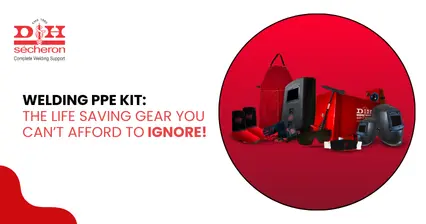
27 June 2026 | Welding
Piston Repair for Mining Industry: Reduce Downtime with LoTherme 468 Welding Electrodes.webp)
.webp)
.webp)

27 June 2026 | Welding
Welding Helmets & Goggles: Essential Welding Safety Equipment for Industrial Welders.webp)

.jpg)

27 June 2026 | Welding
Top 5 Advantages of Flux Cored Arc Welding for Heavy-Duty Applications.png)
27 June 2026 | Welding
5 Reasons Why 7018 Electrode is the Gold Standard for Welding Professionals
27 June 2026 | Welding
Revitalising Power Plant Efficiency: The Role of LoTherme 470M in Drive Shaft Repairs.webp)


27 June 2026 | Welding
How to Weld Ferritic Stainless Steel: Complete Guide for SMAW & Arc Welding


