

Hardfacing is a welding process in which you apply a wear-resistant layer to a metal surface. The goal is simple. Protect the base metal from wear and extend its life.
This is also called hardfacing overlay welding. You are not replacing the part. You are reinforcing it so it lasts longer under harsh conditions.
You will see this across industries like mining, construction, and agriculture. Anywhere equipment is subject to constant abrasion, impact, or corrosion.
Why Hardfacing is Important for Industrial Equipment?
Most equipment does not fail all at once. It wears down slowly.
That is where wear-resistant welding comes in.
Hardfacing helps:
-
Reduce wear from abrasion and impact
-
Extend equipment life
-
Cut down replacement and downtime costs
In real work conditions, this matters more than it sounds. Replacing parts is expensive. Repairing and strengthening them is often the better option.
This is why industrial hardfacing solutions are widely used in heavy industries.
Hardfacing Welding Process Step-by-Step Guide
The hardfacing welding process is not complicated, but each step matters.
1. Surface preparation
Clean the surface properly. Remove rust, oil, and dirt. If the base is not clean, the weld will not hold.
2. Build up a layer
If the surface is damaged, you rebuild it first. This gives you a proper base before applying hardfacing.
3. Deposition of hardfacing material
This is where you apply the hardfacing wire or electrode. The material used must be harder than the base metal.
4. Welding or fusion
The filler and base metal are fused using welding processes like SMAW, GMAW, or GTAW.
5. Cooling and solidification
Let it cool properly. Rushing this step often leads to cracks or weak bonding.
These are the basic steps in the hardfacing welding process. Skip or rush any of them, and the results will show.
Types of Hardfacing Materials
The choice of material depends on the kind of wear you are dealing with.
Chromium carbide
Best for abrasion. Used where surfaces are subject to constant rubbing or sliding wear.
Tungsten carbide
Very hard and wear-resistant. Used in extreme conditions where parts are subject to heavy abrasion.
Niobium carbide
Used where both wear resistance and toughness are needed. Each material is used based on the application. There is no one-size-fits-all.
Hardfacing Wire vs Hardfacing Electrodes
This is where many people get confused.
Hardfacing wire
Used in processes like GMAW and FCAW. It enables faster deposition and is well-suited to larger areas.
Hardfacing electrodes
Used in SMAW. More controlled. Useful for repair work and smaller sections.
Both have their place.
If you are working on large surfaces or production jobs, wire is usually preferred.
For repair and precision work, hardfacing electrodes are easier to handle.
Choosing between hardfacing wire and electrodes depends on the job, not just preference.
Types of Hardfacing Welding Processes
Different jobs need different processes.
SMAW hardfacing
Simple and widely used. Good for repair work.
GMAW hardfacing
Faster and more efficient. Suitable for larger surfaces.
GTAW hardfacing applications
Used where precision matters. Slower, but gives better control.
Each process has its use. You pick based on the work, not the other way around.
How to Choose the Right Hardfacing Wire
Getting the right hardfacing welding wire types makes most of the difference. You don’t always get it right the first time, either. It usually comes down to what kind of wear you’re dealing with. Some parts wear out from abrasion, some from impact, and sometimes even corrosion. Once you figure that out, things get clearer.
After that, you look at the base metal. Not every wire works well with every surface. If the match isn’t right, it shows up later in the weld.
Also consider the application. Mining equipment, construction parts, and agricultural tools all face different conditions. Using the wrong wire might work in the short term. But it will fail faster. That is why people look for the best hardfacing electrodes and wires suited to their exact job.
D&H Sécheron offers a range of solutions like LoTherme-617M, LoTherme-470M, LoTherme-GS-535, LoTherme OA-618, and LoTherme-607H. Each is designed for specific wear conditions and applications.
Applications of Hardfacing in Industry
Hardfacing is used wherever equipment wears out quickly.
Hardfacing for mining equipment
Crusher parts, buckets, and liners are subject to constant abrasion.
Hardfacing for construction equipment
Excavator parts and blades need protection from impact and wear.
Agriculture equipment
Tools used in soil and field operations wear out fast without protection.
This is where abrasion-resistant welding plays a key role.
Common Hardfacing Challenges and Solutions
Hardfacing looks simple, but a few common issues often show up.
Cracking after welding
Usually due to improper cooling or wrong material choice.
Poor bonding
Often caused by bad surface preparation.
Excessive wear even after hardfacing
This happens when the wrong material is used for the job.
Most of these problems come down to process and material selection.
Why Choose D&H Sécheron for Hardfacing Solutions?
When you start doing hardfacing regularly, you realise consistency matters. Not just in the process, but in the consumables. D&H Sécheron has built its range around real industrial use. Their hardfacing solutions are designed for different wear conditions, not just general use.
LoTherme-617M, LoTherme-470M, LoTherme-GS-535, LoTherme OA-618, and LoTherme-607H are the kind of wires you’ll come across in real shop and field work. The kind of jobs where wear is constant and you need something that holds up.
Most welders don’t overthink it. If a product runs well and lasts, they keep using it. Reliability matters more than anything else.


27 June 2026 | Welding
Welding Safety Guidelines: 10 Essential Tips Every Welder Must Follow
.jpg)


27 June 2026 | Welding
An In-Depth Exploration of Low-Alloy Steel: Your Comprehensive Guide


27 June 2026 | Welding
Nagpur - Bori - Tuljapur Road MSH-3 in Yavatmal District (Maharashtra)
27 June 2026 | Welding
3 Tips for Finding the Best Mild Steel Electrode for Your Application


27 June 2026 | Welding
How to Choose a Flux Cored Wire (FCAW Wire) – Complete Buying & Selection Guide


27 June 2026 | Welding
Low Hydrogen Electrodes: Storage, Baking, and Best Practices for High-Quality Welds.jpg)
27 June 2026 | Welding
How to Select the Right Welding Filler Wires for Stainless Steel Welding?


27 June 2026 | Welding
Building the Narendra Modi Stadium with Norma V and Autotherme-1 Electrodes
27 June 2026 | Welding
Understanding Gas Welding: Process, Applications, Advantages & Disadvantages


27 June 2026 | Welding
Low Alloy Steel Welding in a (PEB) Pre Engineered Building Structure
.jpg)
27 June 2026 | Welding
How to Prevent Hydrogen Cracking in Welding: Expert Guide to High-Quality Welds

.jpg)
27 June 2026 | Welding
Welding Rods: Different Types and Tips for Properly Storing and Handling
.jpg)
27 June 2026 | Welding
Tips for Flawless Welds with Stainless Steel Electrodes: Pros and Cons


27 June 2026 | Welding
Exploring Applications and Benefits of Stainless Steel Welding Electrodes


27 June 2026 | Welding
The Complete Welding Machine Maintenance Checklist: Keep Your Equipment Running 24/7
.jpg)
.jpg)

27 June 2026 | Welding
Welding Basics: Joining Metals with Heat and Pressure - A Beginners Guide
27 June 2026 | Welding
Forehand vs. Backhand Welding Techniques: Choosing the Right Method
.webp)
27 June 2026 | Welding
Welding Innovations to Improve Manufacturing Productivity & Quality.jpg)
.jpg)
.webp)
.jpg)


27 June 2026 | Welding
Distinguishing Low-Alloy Steel from High-Alloy Steel: Understanding the Variations


27 June 2026 | Welding
Weathering Steel vs. Traditional Steel: A Comparative Analysis of Performance


27 June 2026 | Welding
Choosing the Right Welding Rod: Why 6013 Electrodes Might Be Your Ideal Option
27 June 2026 | Welding
Exploring Submerged Arc Welding: Process, Advantages, and Limitations

27 June 2026 | Welding
Why Stainless Steel Welding Electrodes Are Essential for Industrial Welding


27 June 2026 | Welding
Why 7018 Electrodes Are Preferred for High-Strength Welds in Pipeline Construction
27 June 2026 | Welding
Understanding Weathering Steel: Characteristics, Advantages, and Common Applications
27 June 2026 | Welding
Filler Wire vs. Stainless Steel Filler Wire: Understanding the Key Differences
27 June 2026 | Welding
What are Mild Steel Electrodes? A Detailed Explanation of Different Types with Examples

27 June 2026 | Welding
Exploring the Impact of Filler Material on Welding Quality and Durability
27 June 2026 | Welding
Choosing the Right Cast Iron Electrode for Different Welding Projects


27 June 2026 | Welding
Top Advantages of Cast Iron Electrodes for Industrial Welding Applications

.png)
27 June 2026 | Welding
Key Benefits and Challenges of Using TIG Welding in Industrial Projects
27 June 2026 | Welding
Lotherme-601: A Game-Changer for Restoring Shoulder Pins in Heavy Machinery


.webp)
27 June 2026 | Welding
Welding PPE Kit Essential Welding Safety Equipment for Maximum Protection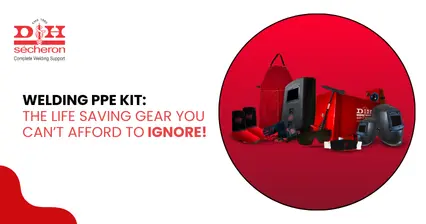
27 June 2026 | Welding
Piston Repair for Mining Industry: Reduce Downtime with LoTherme 468 Welding Electrodes.webp)
.webp)
.webp)

27 June 2026 | Welding
Welding Helmets & Goggles: Essential Welding Safety Equipment for Industrial Welders.webp)

.jpg)

27 June 2026 | Welding
Top 5 Advantages of Flux Cored Arc Welding for Heavy-Duty Applications.png)
27 June 2026 | Welding
5 Reasons Why 7018 Electrode is the Gold Standard for Welding Professionals
27 June 2026 | Welding
Revitalising Power Plant Efficiency: The Role of LoTherme 470M in Drive Shaft Repairs.webp)


27 June 2026 | Welding
How to Weld Ferritic Stainless Steel: Complete Guide for SMAW & Arc Welding


