

Table of Contents
-
Introduction
-
What Causes Hydrogen Cracking in Welding
-
Best Practices to Prevent Hydrogen Cracking
-
Material-Specific Considerations
-
Inspection, Detection & Quality Control
-
Case Studies & Real-World Learnings
-
Conclusion
-
Key Takeaways
Introduction
Hydrogen cracking in welding, also known as cold cracking or hydrogen-induced cracking, is one of the most critical and costly weld defects in industrial fabrication. Unlike hot cracking, which occurs during solidification, hydrogen cracking typically develops hours or even days after welding, often without visible warning signs.
This delayed failure mechanism can compromise structural integrity, increase rework costs, and pose serious safety risks, particularly in pressure vessels, pipelines, structural steel, and high-strength components.
Industries operating under quality standards such as EN ISO 5817 must take strict preventive measures to control hydrogen-related weld defects.
This guide explains what causes hydrogen cracking in steel, the difference between cold and hot cracking, and best practices to prevent it, from consumable selection to inspection.
What Is Hydrogen Cracking in Welding?
Hydrogen cracking is a weld defect that occurs when hydrogen atoms diffuse into the weld metal and heat-affected zone (HAZ), causing microcracks. It is often delayed, appearing after the weld has cooled, which makes early detection difficult.
Key Causes of Hydrogen Cracking
-
Hydrogen Sources
Hydrogen enters the weld from several sources:
-
Moisture in electrode coatings, fluxes, or shielding gases
-
Damp or improperly stored welding consumables
-
Surface contaminants like oil, grease, paint, or rust
-
High environmental humidity during welding
Once in the weld, hydrogen diffuses into the HAZ and can remain trapped until it initiates cracks.
-
Metallurgical Susceptibility
Certain steels are more prone to hydrogen embrittlement:
-
Hard martensitic structures in the HAZ
-
High carbon or alloyed steels (Cr, Mo, etc.)
-
High carbon equivalent (CE) materials
Hard microstructures lower hydrogen tolerance and increase crack initiation risk.
-
Residual Stresses & Cooldown
High stress and rapid cooling promote cracking:
-
Rigid joint designs or excessive clamping
-
Thick sections with uneven heat distribution
-
Fast cooling rates that trap hydrogen
-
Timing and Hydrogen Diffusion Window
Unlike other defects, hydrogen-induced cracking in welding is delayed:
-
Occurs after weld solidification
-
Develops as hydrogen migrates to stressed regions
-
Requires careful preventive measures
Best Practices to Prevent Hydrogen Cracking
-
Use Low-Hydrogen Consumables
Controlling hydrogen input is the most effective preventive measure:
-
Use low-hydrogen electrodes and wires (H4 or H8 classification)
-
Recommended consumables: Like E-7018 SUPRATHERME , E-8018-B2 CROMOTHERME-1 etc
-
Store electrodes in dry, temperature-controlled ovens
-
Re-dry electrodes per manufacturer guidelines
2. Surface Preparation & Cleanliness
Clean surfaces prevent hydrogen pickup:
-
Remove oil, grease, paint, rust, and moisture
-
Ensure joint edges are dry before welding
-
Use degreasing and mechanical cleaning methods
3. Preheating & Interpass Temperature Control
Critical for crack-sensitive steels:
-
Slows cooling, allowing hydrogen to escape
-
Reduces HAZ hardness
-
Preheat based on material, thickness, and carbon equivalent (EN 1011-2)
4. Heat Input Strategy
Balanced heat input prevents rapid cooling and excessive stress:
-
Too low: Rapid cooling - higher hardness
-
Too high: Residual stress - distortion
-
Process selection matters: GTAW for precise control, SMAW/FCAW require strict parameter control
5. Post-Weld Heat Treatment (PWHT)
-
Hydrogen bake-out to remove trapped hydrogen
-
Stress relief to lower tensile stresses
-
Tempering brittle microstructures
-
Critical for thick sections and high-strength steels
6. Joint Design & Restraint Management
-
Minimise excessive clamping
-
Proper fit-up and alignment
-
Welding sequences that balance shrinkage stresses
Material-Specific Considerations
|
Material Type |
Hydrogen Cracking Susceptibility |
Preventive Measures |
|
Carbon & Low-Alloy Steels |
Moderate to high (increases with higher carbon equivalent) |
- Preheating for thick sections - Post-Weld Heat Treatment (PWHT) - Controlled cooling to avoid martensitic HAZ formation |
|
High-Strength & Specialised Steels |
Very high (high sensitivity to hydrogen embrittlement) |
- Strict control of heat input - Proper preheat temperature - Use low hydrogen electrodes |
|
Stainless & Austenitic Alloys |
Lower overall cracking risk, but higher hydrogen solubility |
- Careful control in dissimilar metal welds - Controlled dilution - Correct filler and consumable selection |
Inspection, Detection & Quality Control
Because hydrogen cracking can be delayed, inspection is critical:
-
Visual inspection for surface cracks
-
Dye penetrant testing (DPT) for surface-breaking defects
-
Magnetic particle inspection (MPI) for ferromagnetic steels
-
Ultrasonic testing (UT) and radiography (RT) for subsurface cracks
Standards should align with EN ISO 5817 or project-specific requirements.
Case Studies & Real-World Learnings with D&H Solutions
Scenario 1: Pipeline Fabrication
Pipelines operating under high pressure are prone to hydrogen-induced cracking, which can lead to costly rework and delays. By using D&H Secheron low-hydrogen electrodes and following recommended preheating and interpass temperature practices, welds can achieve improved resistance to cold cracking, reducing the risk of delayed failures.
Scenario 2: High-Strength Pressure Vessel Maintenance
Maintenance of high-strength pressure vessels often faces microcracks due to residual stresses and hydrogen diffusion. Applying D&H guidance on controlled heat input, preheating, and post-weld heat treatment (PWHT) helps mitigate the risk of hydrogen embrittlement and ensures stronger, more durable welds.
Scenario 3: Industrial ROI through Preventive Measures
Industries adopting D&H low-hydrogen welding solutions and technical expertise can experience:
-
Lower defect and repair rates
-
Reduced downtime and associated costs
-
Enhanced confidence in long-term weld reliability
Key Learning: Proactive use of D&H consumables and welding expertise makes the prevention of hydrogen cracking far more effective than reactive repairs, ensuring safer, more durable, and cost-efficient fabrication.
Conclusion
Preventing hydrogen cracking in welding is essential for achieving safe, durable, and high-quality welds in critical applications. By controlling hydrogen input, managing heat effectively, and selecting appropriate low-hydrogen consumables, fabricators can significantly reduce the risk of cold cracking and hydrogen embrittlement.
At D&H Sécheron, we support industries with advanced low-hydrogen welding solutions and application expertise. Explore our LoTherme consumable range or connect with our technical specialists to ensure reliable, crack-resistant weld performance.
Key Takeaways
-
Hydrogen cracking is a delayed, high-risk weld defect
-
It results from hydrogen presence, hard microstructures, stress, and rapid cooling
-
Low-hydrogen consumables and proper storage are critical
-
Preheating and controlled heat input significantly reduce risk
-
PWHT and inspection help prevent delayed failures
-
Prevention costs far less than repair and rework


03 October 2026 | Welding
Welding Safety Guidelines: 10 Essential Tips Every Welder Must Follow
.jpg)


03 October 2026 | Welding
Jam Warora Chandrapur Ballarpur Bamni Road Project: Maharashtra's Major Highway Development
03 October 2026 | Welding
An In-Depth Exploration of Low-Alloy Steel: Your Comprehensive Guide


03 October 2026 | Welding
Six-lane expressway of Mumbai-trans-harbour-link (MTHL) connecting Sewri on Mumbai Island


03 October 2026 | Welding
Nagpur - Bori - Tuljapur Road MSH-3 in Yavatmal District (Maharashtra)
03 October 2026 | Welding
3 Tips for Finding the Best Mild Steel Electrode for Your Application

03 October 2026 | Welding
Ways To Prevent Weld Defects When Working With Different Materials
03 October 2026 | Welding
How to Choose a Flux Cored Wire (FCAW Wire) – Complete Buying & Selection Guide


03 October 2026 | Welding
Low Hydrogen Electrodes: Storage, Baking, Re-Drying, and Best Practices.jpg)
03 October 2026 | Welding
How to Select the Right Welding Filler Wires for Stainless Steel Welding?
03 October 2026 | Welding
SMAW: Guidelines, Advice, and Troubleshooting Tips for Beginners


03 October 2026 | Welding
Building the Narendra Modi Stadium with Norma V and Autotherme-1 Electrodes
03 October 2026 | Welding
Understanding Gas Welding: Process, Applications, Advantages & Disadvantages


03 October 2026 | Welding
Low Alloy Steel Welding in a (PEB) Pre Engineered Building Structure
.jpg)
03 October 2026 | Welding
Welding Applications Across Different Industries: Processes and Uses

.jpg)
03 October 2026 | Welding
Welding Rods: Different Types and Tips for Properly Storing and Handling
.jpg)
03 October 2026 | Welding
Tips for Flawless Welds with Stainless Steel Electrodes: Pros and Cons

03 October 2026 | Welding
Exploring Applications and Benefits of Stainless Steel Welding Electrodes

03 October 2026 | Welding
Mumbai Trans-Harbour Link (MTHL): Bridging Mumbai and Navi Mumbai

03 October 2026 | Welding
Mastering Stick Welding: 5 Expert Tips for Perfect SMAW Technique
03 October 2026 | Welding
The Complete Welding Machine Maintenance Checklist: Keep Your Equipment Running 24/7
.jpg)
.jpg)

03 October 2026 | Welding
Welding Basics: Joining Metals with Heat and Pressure - A Beginners Guide
03 October 2026 | Welding
Forehand vs. Backhand Welding Techniques: Choosing the Right Method
03 October 2026 | Welding
Creep-Resistant Steels: Heat Treatment Excellence by D&H Secheron.webp)
03 October 2026 | Welding
Welding Innovations to Improve Manufacturing Productivity & Quality.jpg)
03 October 2026 | Welding
Implementation of 96.3 CBM Sarambala medium irrigation scheme at Sawantwadi in Sindhudurg.jpg)
.webp)
03 October 2026 | Welding
Key Considerations When Choosing the Correct Gas for MIG Welding.jpg)


03 October 2026 | Welding
What are Nickel Electrodes? Exploring Varieties and Applications with Real-world Examples

03 October 2026 | Welding
Exploring the World of Welding Consumables: Types and Applications
03 October 2026 | Welding
Distinguishing Low-Alloy Steel from High-Alloy Steel: Understanding the Variations
03 October 2026 | Welding
Hardfacing Welding Process Types, Wires, Electrodes and Applications


03 October 2026 | Welding
Weathering Steel vs. Traditional Steel: A Comparative Analysis of Performance
03 October 2026 | Welding
Advantages of Submerged Arc Welding (SAW) Welding: Efficiency, Quality, and Cost Savings

03 October 2026 | Welding
Choosing the Right Welding Rod: Why 6013 Electrodes Might Be Your Ideal Option
03 October 2026 | Welding
Exploring Submerged Arc Welding: Process, Advantages, and Limitations

03 October 2026 | Welding
Why Stainless Steel Welding Electrodes Are Essential for Industrial Welding
03 October 2026 | Welding
Selecting the Right Hardfacing Electrode: A Decision-Making Guide
03 October 2026 | Welding
Innovations in Stainless Steel Welding: Emerging Trends and Technologies for Enhanced Productivity
03 October 2026 | Welding
Why 7018 Electrodes Are Preferred for High-Strength Welds in Pipeline Construction
03 October 2026 | Welding
Understanding Weathering Steel: Characteristics, Advantages, and Common Applications
03 October 2026 | Welding
Filler Wire vs. Stainless Steel Filler Wire: Understanding the Key Differences
03 October 2026 | Welding
What are Mild Steel Electrodes? A Detailed Explanation of Different Types with Examples

03 October 2026 | Welding
Exploring the Impact of Filler Material on Welding Quality and Durability
03 October 2026 | Welding
Choosing the Right Cast Iron Electrode for Different Welding Projects
03 October 2026 | Welding
Understanding the Full Potential of Flux Cored Arc Welding (FCAW)
03 October 2026 | Welding
A Comprehensive Guide to Submerged Arc Welding Wire: Benefits, Uses, Best Practices & More

03 October 2026 | Welding
Benefits of Using Nickel Electrodes in Corrosion-Resistant Welding
03 October 2026 | Welding
5 Factors to Consider When Selecting Stainless Steel Welding Rods

03 October 2026 | Welding
Top Advantages of Cast Iron Electrodes for Industrial Welding Applications

.png)
03 October 2026 | Welding
Key Benefits and Challenges of Using TIG Welding in Industrial Projects
03 October 2026 | Welding
Lotherme-601: A Game-Changer for Restoring Shoulder Pins in Heavy Machinery

03 October 2026 | Welding
A Complete Guide to Welding Electrodes: Types of Welding Electrodes, Uses & Selection Tips
03 October 2026 | Welding
Rotary Kiln Cooler Section Repair Using LoTherme 352: A Proven Welding Solution by D&H Sécheron

.webp)
03 October 2026 | Welding
Welding PPE Kit Essential Welding Safety Equipment for Maximum Protection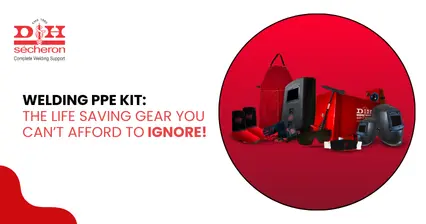
03 October 2026 | Welding
Piston Repair for Mining Industry: Reduce Downtime with LoTherme 468 Welding Electrodes.webp)
.webp)

03 October 2026 | Welding
Welding Helmets & Goggles: Essential Welding Safety Equipment for Industrial Welders.webp)
.png)

.jpg)

03 October 2026 | Welding
Top 5 Advantages of Flux Cored Arc Welding for Heavy-Duty Applications.png)
03 October 2026 | Welding
5 Reasons Why 7018 Electrode is the Gold Standard for Welding Professionals
03 October 2026 | Welding
Revitalising Power Plant Efficiency: The Role of LoTherme 470M in Drive Shaft Repairs.webp)


03 October 2026 | Welding
How to Weld Ferritic Stainless Steel: Complete Guide for SMAW & Arc Welding


