


Table of Contents
-
Introduction
-
What is Submerged Arc Welding (SAW)?
-
Typical Applications of SAW
-
Why Choose SAW? Major Advantages
-
Key Process Features Driving SAW Benefits
-
Limitations & Considerations
-
SAW vs Other Welding Methods
-
Best Practice Tips for Maximising SAW Performance
-
Real-World Applications & Case Study
-
Conclusion
Introduction
Submerged Arc Welding (SAW) is a high-productivity welding process widely used in heavy fabrication, pipelines, pressure vessels, and submerged arc welding applications for shipbuilding. Its fully or semi-automated nature, and strong protection from flux, SAW gives reliable welds without frequent stops or excessive spatter.
In this blog, we’ll explore submerged arc welding, how the process works, and why industries rely on SAW for speed, strength, and cost control.
What is Submerged Arc Welding (SAW)?
SAW is a high-efficiency welding process where a continuously fed wire electrode forms an arc with the workpiece, completely submerged under a granular flux blanket. This flux melts into slag, shielding the weld pool and refining weld metal chemistry.
This submerged environment ensures exceptionally clean, stable, and smooth welds with minimal spatter, high deposition rates, and superior mechanical properties.
How SAW Works in Industrial Welding
The flux plays multiple critical roles:
-
Protecting the molten weld from oxygen/nitrogen contamination
-
Stabilises the arc and helps achieve deeper penetration
-
Refines weld chemistry to improve strength.
-
Forming slag that shapes and smoothens the final bead
Key Components of the SAW Process
|
Component |
Function |
|
Wire Electrode |
Acts as the filler metal; available in various diameters depending on the application |
|
Granular Flux Blanket |
Shields the arc, stabilizes the weld pool, and refines weld chemistry |
|
Power Source ( AC/DC) |
Provides steady arc energy for deep penetration |
|
Automatic / Mechanized Feed System |
Ensures continuous wire feed and uniform weld deposition |
Typical Applications of SAW
Submerged Arc Welding is widely used where high productivity and strong, defect-free welds are essential. Common applications include:
-
Pressure vessels and boilers
-
Shipbuilding and offshore structures
-
Large storage tanks and heavy steel structures
-
Pipelines and spiral-welded pipes
-
Structural beams and bridge components
SAW is especially effective for thick plates, long seams, and repetitive welds that require precision, speed, and consistency.
Why Choose SAW? Major Advantages
-
High Efficiency & Productivity
SAW is known for its exceptionally high deposition rates, far exceeding those of manual and semi-automatic welding processes. Here’s why it is considered one of the most productive methods:
-
Continuous wire feeding
-
High travel speeds
-
Minimal arc visibility interruptions
-
Reduced operator involvement
These capabilities make SAW one of the top choices for large-scale Submerged Arc Welding Automation.
-
Superior Weld Quality
SAW produces exceptionally clean, uniform, and defect-free welds due to:
-
Deep weld penetration
-
Complete flux shielding
-
Minimal fume, spatter, or arc light
-
Consistent mechanical properties
The result is a high-quality weld with fewer flaws, ideal for critical applications.
-
Cost Savings & Operational Benefits
SAW’s electrical efficiency and automation capabilities make it a cost-effective solution for high-volume production. SAW reduces cost through:
-
High electrical efficiency
-
Fewer weld passes needed
-
Flux recovery and reuse
-
Low rejection and rework rates
-
Reduced the need for highly skilled welders
Overall, SAW offers one of the best cost-to-output ratios in the heavy industry sector.
-
Best for Thick Materials & Long Welds
SAW excels in applications requiring deep, high-strength welds, such as:
-
Shipbuilding
-
Long seam pipelines
-
Heavy structures
-
Pressure vessels
D&H Sécheron consumables, such as AutoTherme Grade B and AutoTherme Grade Q, ensure stable arc performance and consistent weld quality, even in the most demanding environments.
Key Process Features that Drive These Benefits
SAW delivers exceptional efficiency and weld quality because of several built-in process characteristics. These features work together to create a controlled, stable, and high-productivity welding environment.
1. Flux Blanket Protection - Prevents oxidation, improves heat transfer.
2. Continuous Wire Feeding - Enables automation and steady deposition.
3. Optimised Welding Positions - Ideal for flat/horizontal welds and long seams.
4. Efficient Flux Recovery Systems - Reduce waste and enhance cost efficiency.
Together, these features contribute to the high productivity and reliability of submerged arc welding automation.
Limitations & Considerations
Although SAW delivers exceptional productivity, it comes with certain constraints that users must consider:
Key Limitations
-
Works best only in flat/horizontal positions
-
Higher initial investment in automation & flux handling
-
Not suitable for thin materials or complex geometries
-
Requires proper flux management
-
Limited accessibility in confined spaces
When these limitations affect feasibility, alternative processes such as MIG, TIG, or SMAW may be more suitable, depending on project requirements.
SAW vs Other Welding Methods
When comparing submerged arc welding (SAW) to other welding methods, SAW stands out for its efficiency, deposition rate, and consistency.
|
Parameter |
SAW |
MIG/TIG |
SMAW |
|
Deposition Rate |
Very High |
Moderate |
Low |
|
Automation |
Fully/Partially Automated |
Semi |
Manual |
|
Weld Quality |
Highly Consistent |
High |
Variable |
|
Fume & Arc Light |
Minimal |
Moderate |
High |
|
Best For |
Thick Plates, Long Welds |
Thin/Medium Sections |
Repair, Maintenance |
SAW clearly leads in productivity and consistency for large-scale fabrication.
Best Practice Tips for Maximising SAW Performance
To achieve the highest SAW welding deposition rate and reliability:
-
Choose the correct SAW welding flux and electrode combination.
-
Optimise parameters, current, voltage, and travel speed, for your material.
-
Maintain flux recovery systems for clean and consistent shielding.
-
Reduce waste with flux recycling and automated handling.
-
Follow safety guidelines for fumes and heat exposure.
These practices help maintain the superior weld quality for which SAW is known.
Real-World Applications & Case Examples
SAW is widely used across industries such as:
-
Shipbuilding and offshore structures
-
Pipeline and spiral pipe manufacturing
-
Heavy steel fabrication and structural components
-
Pressure vessels, boilers, and storage tanks
Case Study: SAW in Shipbuilding
Challenge: Large marine structures require deep penetration, uniform welds, and minimal defect rates to ensure structural integrity.
Solution: SAW delivered stable arc performance, continuous welding, and superior flux shielding.
Outcome:
-
Reduced rework
-
Faster production cycles
-
Higher mechanical strength
-
Superior bead quality
D&H Sécheron’s SAW range supports manufacturers with consistent performance across all heavy-duty applications.
Conclusion
Submerged Arc Welding (SAW) delivers exceptional efficiency, weld quality, and cost savings, making it the preferred choice for heavy fabrication and long, continuous welds.
While it may have limitations in setup and positioning, its advantages in productivity, automation, and quality far outweigh them for large-scale applications.
As a leading Welding Consumables Manufacturer, D&H Sécheron offers a comprehensive range of SAW wires, fluxes, and welding consumables engineered for heavy-duty fabrication and automated welding environments.
Consult our experts or download detailed product datasheets to find the ideal solution for your next industrial welding project.
Key Takeaways
-
SAW delivers high deposition rates and superior weld quality for heavy fabrication.
-
Ideal for thick plates, long seams, and automated welding setups.
-
Full flux shielding ensures clean, stable, and defect-free welds.
-
Offers significant cost savings through efficiency, fewer passes, and reduced rework.
-
Not suitable for thin materials, complex joints, or vertical/overhead positions.
-
Performance improves with correct flux–electrode selection and optimised parameters.
-
Proven effectiveness in industries like shipbuilding, pipelines, and pressure vessels.


17 October 2026 | Welding
Welding Safety Guidelines: 10 Essential Tips Every Welder Must Follow
.jpg)


17 October 2026 | Welding
Jam Warora Chandrapur Ballarpur Bamni Road Project: Maharashtra's Major Highway Development
17 October 2026 | Welding
An In-Depth Exploration of Low-Alloy Steel: Your Comprehensive Guide


17 October 2026 | Welding
Six-lane expressway of Mumbai-trans-harbour-link (MTHL) connecting Sewri on Mumbai Island


17 October 2026 | Welding
Nagpur - Bori - Tuljapur Road MSH-3 in Yavatmal District (Maharashtra)
17 October 2026 | Welding
3 Tips for Finding the Best Mild Steel Electrode for Your Application

17 October 2026 | Welding
Ways To Prevent Weld Defects When Working With Different Materials
17 October 2026 | Welding
How to Choose a Flux Cored Wire (FCAW Wire) – Complete Buying & Selection Guide


17 October 2026 | Welding
Low Hydrogen Electrodes: Storage, Baking, Re-Drying, and Best Practices.jpg)
17 October 2026 | Welding
How to Select the Right Welding Filler Wires for Stainless Steel Welding?
17 October 2026 | Welding
SMAW: Guidelines, Advice, and Troubleshooting Tips for Beginners


17 October 2026 | Welding
Building the Narendra Modi Stadium with Norma V and Autotherme-1 Electrodes
17 October 2026 | Welding
Understanding Gas Welding: Process, Applications, Advantages & Disadvantages


17 October 2026 | Welding
Low Alloy Steel Welding in a (PEB) Pre Engineered Building Structure
.jpg)
17 October 2026 | Welding
How to Prevent Hydrogen Cracking in Welding: Expert Guide to High-Quality Welds
17 October 2026 | Welding
Welding Applications Across Different Industries: Processes and Uses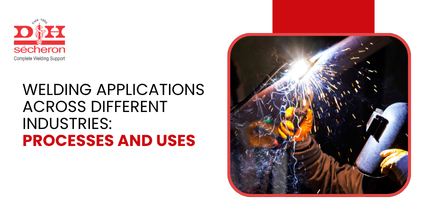

.jpg)
17 October 2026 | Welding
Welding Rods: Different Types and Tips for Properly Storing and Handling
.jpg)
17 October 2026 | Welding
Tips for Flawless Welds with Stainless Steel Electrodes: Pros and Cons

17 October 2026 | Welding
Exploring Applications and Benefits of Stainless Steel Welding Electrodes

17 October 2026 | Welding
Mumbai Trans-Harbour Link (MTHL): Bridging Mumbai and Navi Mumbai

17 October 2026 | Welding
Mastering Stick Welding: 5 Expert Tips for Perfect SMAW Technique
17 October 2026 | Welding
The Complete Welding Machine Maintenance Checklist: Keep Your Equipment Running 24/7
.jpg)
.jpg)

17 October 2026 | Welding
Welding Basics: Joining Metals with Heat and Pressure - A Beginners Guide
17 October 2026 | Welding
Forehand vs. Backhand Welding Techniques: Choosing the Right Method
17 October 2026 | Welding
Creep-Resistant Steels: Heat Treatment Excellence by D&H Secheron.webp)
17 October 2026 | Welding
Welding Innovations to Improve Manufacturing Productivity & Quality.jpg)
17 October 2026 | Welding
Implementation of 96.3 CBM Sarambala medium irrigation scheme at Sawantwadi in Sindhudurg.jpg)
.webp)
17 October 2026 | Welding
Key Considerations When Choosing the Correct Gas for MIG Welding.jpg)


17 October 2026 | Welding
What are Nickel Electrodes? Exploring Varieties and Applications with Real-world Examples

17 October 2026 | Welding
Exploring the World of Welding Consumables: Types and Applications
17 October 2026 | Welding
Distinguishing Low-Alloy Steel from High-Alloy Steel: Understanding the Variations
17 October 2026 | Welding
Hardfacing Welding Process Types, Wires, Electrodes and Applications


17 October 2026 | Welding
Weathering Steel vs. Traditional Steel: A Comparative Analysis of Performance

17 October 2026 | Welding
Choosing the Right Welding Rod: Why 6013 Electrodes Might Be Your Ideal Option
17 October 2026 | Welding
Exploring Submerged Arc Welding: Process, Advantages, and Limitations

17 October 2026 | Welding
Why Stainless Steel Welding Electrodes Are Essential for Industrial Welding
17 October 2026 | Welding
Selecting the Right Hardfacing Electrode: A Decision-Making Guide
17 October 2026 | Welding
Innovations in Stainless Steel Welding: Emerging Trends and Technologies for Enhanced Productivity
17 October 2026 | Welding
Why 7018 Electrodes Are Preferred for High-Strength Welds in Pipeline Construction
17 October 2026 | Welding
Understanding Weathering Steel: Characteristics, Advantages, and Common Applications
17 October 2026 | Welding
Filler Wire vs. Stainless Steel Filler Wire: Understanding the Key Differences
17 October 2026 | Welding
What are Mild Steel Electrodes? A Detailed Explanation of Different Types with Examples

17 October 2026 | Welding
Exploring the Impact of Filler Material on Welding Quality and Durability
17 October 2026 | Welding
Choosing the Right Cast Iron Electrode for Different Welding Projects
17 October 2026 | Welding
Understanding the Full Potential of Flux Cored Arc Welding (FCAW)
17 October 2026 | Welding
A Comprehensive Guide to Submerged Arc Welding Wire: Benefits, Uses, Best Practices & More

17 October 2026 | Welding
Benefits of Using Nickel Electrodes in Corrosion-Resistant Welding
17 October 2026 | Welding
5 Factors to Consider When Selecting Stainless Steel Welding Rods

17 October 2026 | Welding
Top Advantages of Cast Iron Electrodes for Industrial Welding Applications

.png)
17 October 2026 | Welding
Key Benefits and Challenges of Using TIG Welding in Industrial Projects
17 October 2026 | Welding
Lotherme-601: A Game-Changer for Restoring Shoulder Pins in Heavy Machinery

17 October 2026 | Welding
A Complete Guide to Welding Electrodes: Types of Welding Electrodes, Uses & Selection Tips
17 October 2026 | Welding
Rotary Kiln Cooler Section Repair Using LoTherme 352: A Proven Welding Solution by D&H Sécheron

.webp)
17 October 2026 | Welding
Welding PPE Kit Essential Welding Safety Equipment for Maximum Protection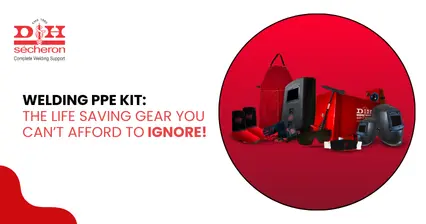
17 October 2026 | Welding
Piston Repair for Mining Industry: Reduce Downtime with LoTherme 468 Welding Electrodes.webp)
.webp)

17 October 2026 | Welding
Welding Helmets & Goggles: Essential Welding Safety Equipment for Industrial Welders.webp)
.png)

.jpg)

17 October 2026 | Welding
Top 5 Advantages of Flux Cored Arc Welding for Heavy-Duty Applications.png)
17 October 2026 | Welding
5 Reasons Why 7018 Electrode is the Gold Standard for Welding Professionals
17 October 2026 | Welding
Revitalising Power Plant Efficiency: The Role of LoTherme 470M in Drive Shaft Repairs.webp)


17 October 2026 | Welding
How to Weld Ferritic Stainless Steel: Complete Guide for SMAW & Arc Welding


